Since Roman sculptures
bear a close resemblance to those by ancient Greeks, their aesthetic and
artistic qualities are considered indisputable and unsurpassable. After all,
after so many centuries they still don’t fail to amaze, leaving visitors of the
Eternal City breathless, inspired and craving for more.
The noble pentagon of Rome
It is true that you
will come across many examples of the cherished art of sculpture virtually
wherever you go. Some of them will impress you with their magnitude, others –
with their attention to detail, but one thing is certain – you’ll never be
disappointed. To facilitate your search for the best impressions, here’s a list
of 5 sculptures you should include on your travel agenda as absolutely
mandatory.
<!–
[if !supportLists]
–>
1.
<!–
[endif]
–>
Pietà
by
Michelangelo Buonarroti
This masterpiece by
Michelangelo, dating back to 1499, is located in the City of Vatican, in St.
Peter’s Basilica. There are, in fact, as many as seven versions of Pietà, but
this one seems to be most-known throughout the whole world. Although this powerful
work of art, created with lots of attention to detail, is now hidden behind a
bulletproof acrylic glass (for safety reasons), it still evokes deep emotions,
as well as fantastic aesthetic impressions.
<!–
[if !supportLists]
–>
2.
<!–
[endif]
–>
The
Belvedere Torso
by Apollonios, son of Nestor
If you’re planning a
trip to Vatican Museums in the Vatican City, this well-known fragment of a nude
male statue, dated to the first or second century BC and created by an Athenian
sculpture, is a must-see. It is a notable example of admiration of the human
body, and an extremely significant source of inspiration for all artists that
gained fame during the Renaissance and later.
<!–
[if !supportLists]
–>
3.
<!–
[endif]
–>
Moses
by
Michelangelo Buonarroti
This stunning
sculpture is yet another contribution by Michelangelo. It is found in the
church of San Pietro in Vincoli and is best viewed with the local light box on,
so better have some coins with you to see the statue in its full glory. You’re
bound to be overwhelmed by the strong presence of the figure, and probably
surprised a bit by the horns attached to its head – but that’s just a symbol of
intelligence and wisdom of the time.
<!–
[if !supportLists]
–>
4.
<!–
[endif]
–>
The Capitoline
Wolf
Although the creator
of this highly important work of art remains unknown to date, there’s no doubt
that this mysterious bronze sculpture is a significant remnant of the past for
the locals, as well as a great sight to see for visitors. It is now to be seen
in Musei Capitolini and depicts a she-wolf feeding the ancient founders of
Rome, Romulus and Remus twins. You’ll be able to read the whole – incredibly
captivating – story in the museum, so there’s no point in spoiling it now. The
sculpture is really popular due its historical importance, as well as artistic
qualities (dating back to as early as the 5th century BC!), so
expect the site to be rather populated with visitors. Still, it is worth to
witness the magnificence of this creation in person.
<!–
[if !supportLists]
–>
5.
<!–
[endif]
–>
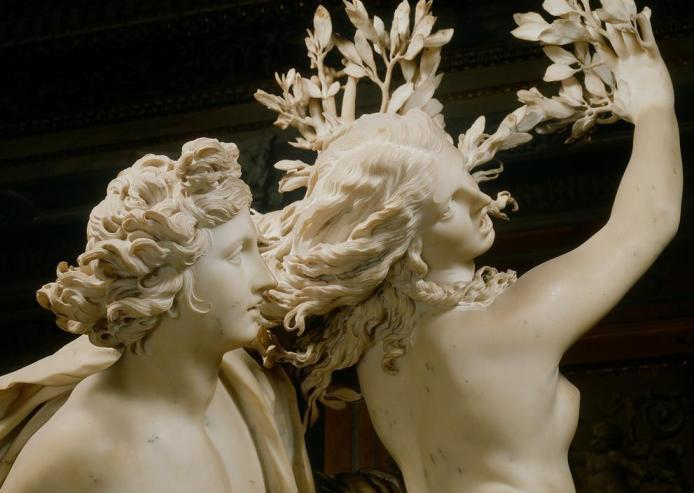
Apollo
and Daphne
by Gian Lorenzo Bernini
If you head towards
the Spanish Steps, you should also by all means visit the nearby Villa
Borghese. Apart from the fact it’s a lovely public park (third largest in the
whole city!), it is bound to catch your attention with all the works of art
you’ll find inside. One such masterpiece is no doubt the remarkable
Apollo and Daphne statue by Gian Lorenzo
Bernini. At a distance, the two marble figures seem to be dancing, but on
closer inspection you’ll notice that Daphne in fact tries to escape from Apollo
but seems to fail as her body slowly transforms into branches and leaves. The
sculpture is so real and dynamic, that the characters appear to be ready to
come alive any time! And come to think of it – this masterpiece was completed
at the beginning of the 17th century!
2015 - 2021 © CheapApartmentsRome.com. Privacy Statement | Terms and Conditions
